
Biometric identification and authentication have become extremely popular across so many industries that these technologies can now be found in numerous applications surrounding our everyday lives. From unlocking your smartphone using Face ID to checking-in-and-out of your workplace using biometric technology, the applications are expanding more and more overtime.
The emergence of biometric devices has certainly occurred at an alarming rate over a short period of time. Currently, you can find the following devices widely available on the market:
- Facial recognition software
- Iris scanners
- Single and dual fingerprint scanners
- Palm scanners
This article will predominantly focus on delving into the various biometric authentication advantages and disadvantages – explaining why they have become so present in modern life but also acknowledging any potential drawbacks that arise from the integration of biometrics.
Popular industry applications of Biometric Technology
Before looking at specific advantages and disadvantages of biometric authentication in relation to attendance monitoring, it is useful to establish the most popular industries that integrate biometric technologies into their everyday operations.
Whether it be attendance monitoring of a workforce or guest visitor management, there are numerous applications for each, so let’s outline some for each service below:
Bio Attendance:
- Offices
- Retail
- Mobile and remote employee management
- Student attendance
- Construction site
- Healthcare
- Service and hospitality
- Factory and warehouse
- Agriculture
Visitor Management:
- Travel and excursion
- Banking/financial institutes
- Hotels and restaurants
- Consultation services
- Building and apartments
- Customer support
- Entertainment industry
- Schools and campuses
Advantages and disadvantages of biometric technologies
The statistical evidence behind the upsurge in biometric authentication technologies across industries undeniably shows it is in high demand.
But is it just a case of this boom being a resounding success? Let’s outline some of the reasoning from both sides of the fence.
Advantages of biometric authentication
- Improvement in security and reliability
- Enhanced user experience
- Extremely difficult to replicate
- Improving businesses via attendance monitoring
- Improvement in security and reliability
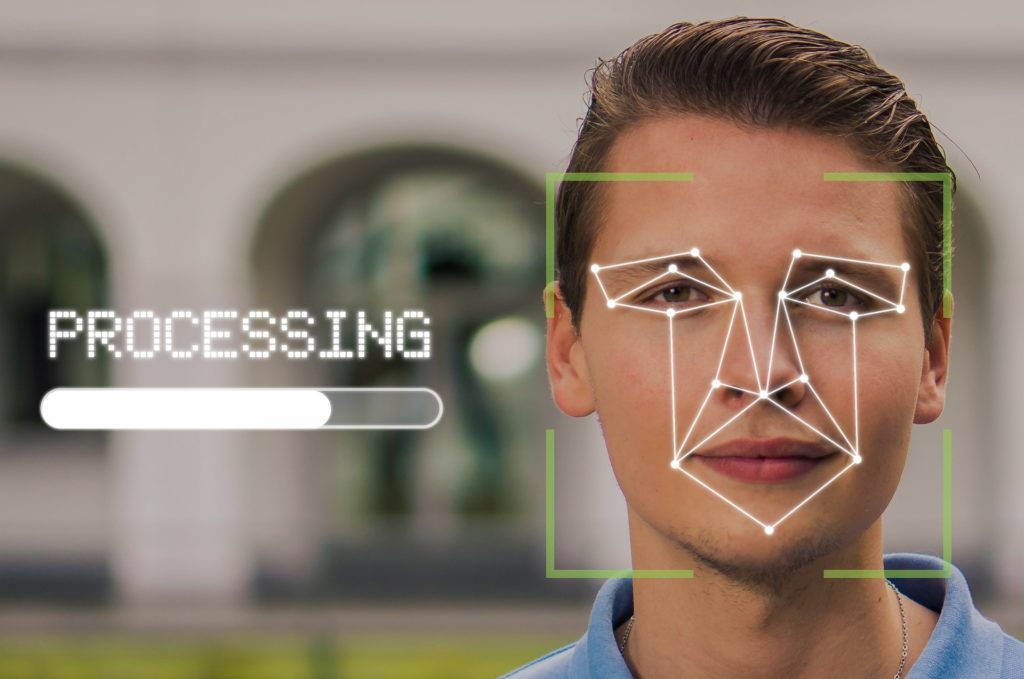
Biometric authentication, whether it be in the form of face recognition, provides increased levels of assurance to business owners and companies that verifying a person’s identity this way is hard to surpass. Traditional authentication methods are easier for fraudsters and robots to breach. With each person having their own unique facial characteristics that make up their biometric print, facial recognition is a roadblock that fraudsters will struggle to overcome.
- Extremely difficult to replicate
Physical biometrics cannot be replicated with the current technology we have at our disposal. It’s said that there is a one in 64 billion chance that a biometric marker of yours, for instance, will provide an exact match to someone else’s.
- Enhanced user experience
We’ve all been there where we’ve forgotten a password or struggled to remember which one is correct. From the user’s perspective, biometric technology can recognize and identify an individual in a matter of seconds. Monitoring attendance at your workplace is a great example of a straightforward user experience and an effective outcome from the use of technology by the employer.
4. Improving businesses via attendance monitoring
We touched on it briefly above. A biometric time clock system is helping to transform the productivity and economic efficiency of businesses across industries by accurately monitoring the attendance of employees, both on their arrival and departure from the workplace.
This can be done on-premise or remotely via software. Biometric authentication removes the possibility of buddy punching and timesheet fraud committed by the individual or on behalf of another employee.
Biometrics can also be used for visitor management systems within the workplace. VMS is an accurate and efficient solution to manage appointments and provide access for visitors & guests.
Disadvantages
- Requires infrastructure setup
- Requires maintenance
- False positives
- Multiple biometric options
For some companies, having numerous forms of biometric device methods to choose from can be a good problem to have. But for those who are new to this market with iris, face, fingerprint, and palm devices available, it can be tricky to know which form of biometric technology identification is the perfect fit for your business. In this instance, we always encourage companies to open dialog with biometric suppliers so they can understand which form of authentication best suits their business.
The fast evolution and advancement of biometric authentication technology are impressive, to say the least. Whilst there are small potential drawbacks, biometric technologies are undeniably positively transforming numerous industries with their flexible application into processes such as biometric attendance monitoring – an area we are excited to be a part of.
Our Biometric Technology Story
NCheck systems are part of the Neurotechnology umbrella.
Neurotechnology was founded with the driving principle to utilize neural networks for applications that benefit from artificial intelligence, robotics and computer vision. One of the prioritized applications upon creation was biometric person identification.
Neurotechnology first burst onto the biometric scene in 1991 with a launch of its very own fingerprint identification system for the purpose of criminal investigations. Further research into this field resulted in the release of the first fingerprint identification algorithm for civil uses, which became public in 1997.
If you have any questions do not hesitate to contact us here.